Maca for Women’s Sexual Wellness: What Small Menopause Trials Can—and Cannot—Show
A measured guide to maca for women’s sexual wellness after menopause, covering small trials, hormone findings, product differences and practical care.

Small trials suggest maca may improve some sexual-function and mood measures after menopause, but they do not show a reliable hormone-boosting effect.
Maca’s best signal is not a hormone surge
Maca is often advertised as if it raises female hormones. The more interesting human finding is different. In a small crossover trial, postmenopausal women reported better sexual-function and psychological symptom scores without meaningful changes in measured estrogen or androgen markers.
That result keeps the conversation grounded. A benefit, if real, might not require a detectable hormone increase. It also means marketers should not turn the study into an estrogen-boosting promise.
Fourteen women completed that trial. The signal is worth knowing, but it is far too small to predict an individual response or settle questions about dose and preparation.
Sexual function questionnaires combine several domains, such as desire, arousal, comfort and satisfaction. An improved total or subscale score does not mean every domain changed, and it should not be translated into a guaranteed increase in libido.

What the crossover trial showed
Participants took 3.5 grams of maca powder daily for six weeks and placebo for six weeks, with the order randomized. Researchers measured estradiol, follicle-stimulating hormone, luteinizing hormone and sex-hormone-binding globulin.
Hormone concentrations did not differ between maca and placebo. Scores for sexual dysfunction and some psychological symptoms improved during the maca phase. Because each participant received both interventions, the design helped control for stable personal differences.
Crossover trials can still be affected by small samples, expectation and carryover between periods. The results also apply to the tested powder and schedule, not every gummy, concentrated extract or multi-ingredient libido formula.
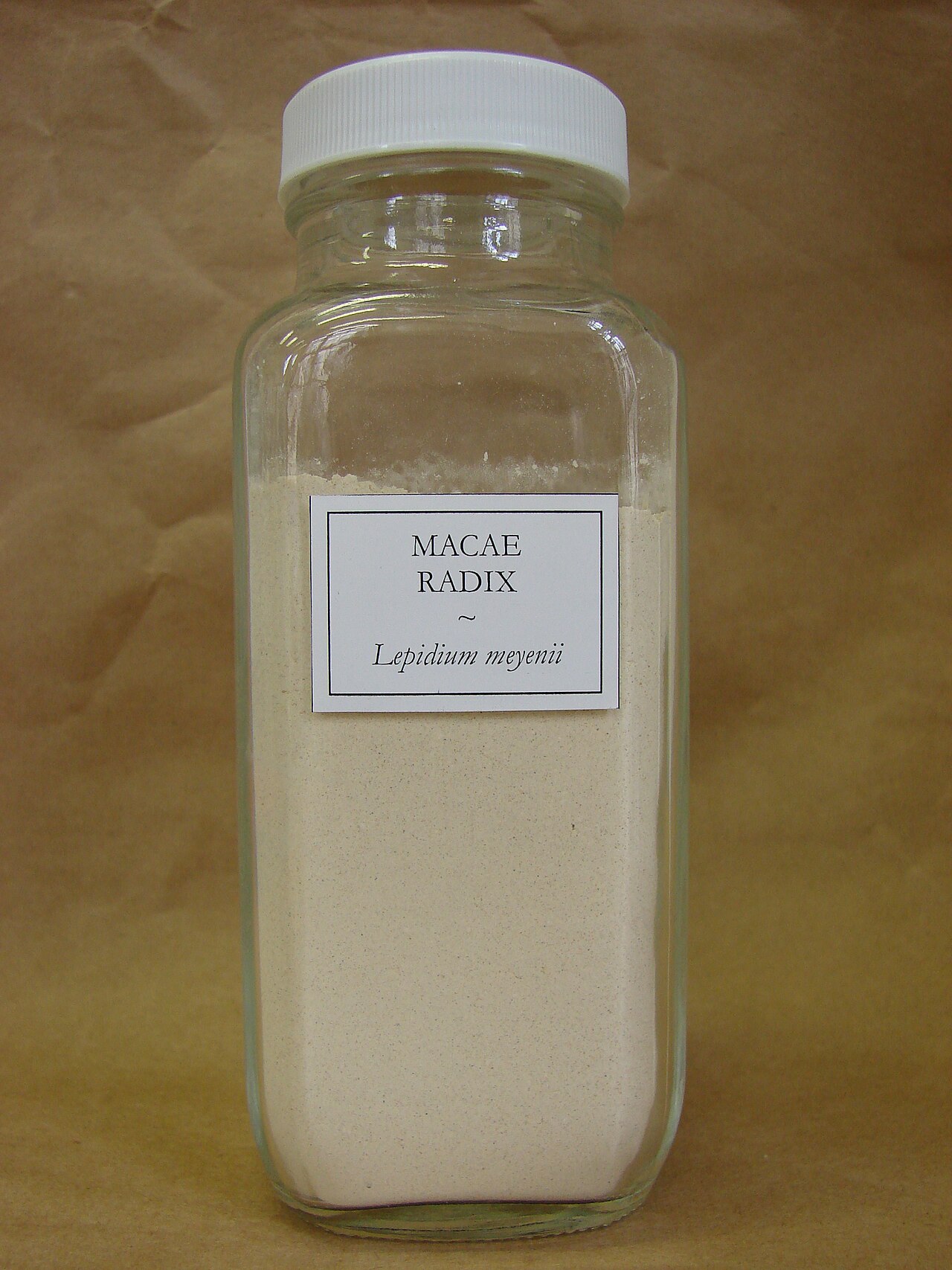
The powder dose in the crossover trial was measured in grams, far above the milligram figures seen on some concentrated-extract labels. Extract ratios can complicate comparisons further, so the largest-looking number is not automatically the closest study match.
A second pilot adds uncertainty, not certainty
Another placebo-controlled pilot studied gelatinized maca in early postmenopausal women. It reported hormone and symptom changes, but the groups were very small and the design included a noticeable placebo response.
The two studies do not align neatly on hormones. That disagreement is a reason to avoid endocrine claims, not a reason to choose the most exciting number. Larger, independently replicated trials are still needed.
Maca may also be studied in other sexual-health settings, but low desire after menopause can reflect vaginal pain, relationship factors, depression, sleep loss, medication effects and medical conditions. One botanical cannot answer every pathway.
Gelatinization refers to processing that removes much of maca’s starch and can change digestibility. It does not mean the preparation is gelatin-based. That production difference is another reason not to pool every maca trial or product.
Compare categories before comparing prices
A maca powder and a finished libido gummy are not evidence-equivalent. Flirty Time by Liva, for example, is currently sold as a strawberry-peach women’s libido gummy centered on LivaSense ashwagandha rather than maca. Research on maca cannot be used as proof for that finished product, and ashwagandha research cannot validate maca.
The useful comparison is ingredient, dose, format, additional actives, allergen information and purchase terms. The product page offers one-, two- and three-bottle options and a 30-day satisfaction guarantee; those are shopping facts, not clinical outcomes.
Pregnancy, breastfeeding, hormone-sensitive conditions, thyroid disease and interacting medicines deserve clinician review before concentrated botanical use. Stop if a new supplement causes rash, digestive symptoms, palpitations or mood changes.
Purchase guarantees and review counts can help evaluate service terms, but neither is clinical evidence. A refund policy reduces financial risk; it does not raise the probability that a finished formula will change sexual function.
Start with comfort and cause
Pain, dryness, bleeding or a sudden change in sexual function warrants medical assessment. Lubricants, vaginal moisturizers, relationship communication, sleep care and evidence-based menopause treatments may matter more than another supplement.
Maca’s small trials support curiosity, not certainty. The most honest promise is a structured experiment with clear expectations—never a guaranteed return of desire.