Dietary Nitrate and Endothelial Function: What FMD Can—and Cannot—Show
A 2026 meta-analysis found better flow-mediated dilation with nitrate, while a hypertension trial was null. Learn what FMD and labels mean.
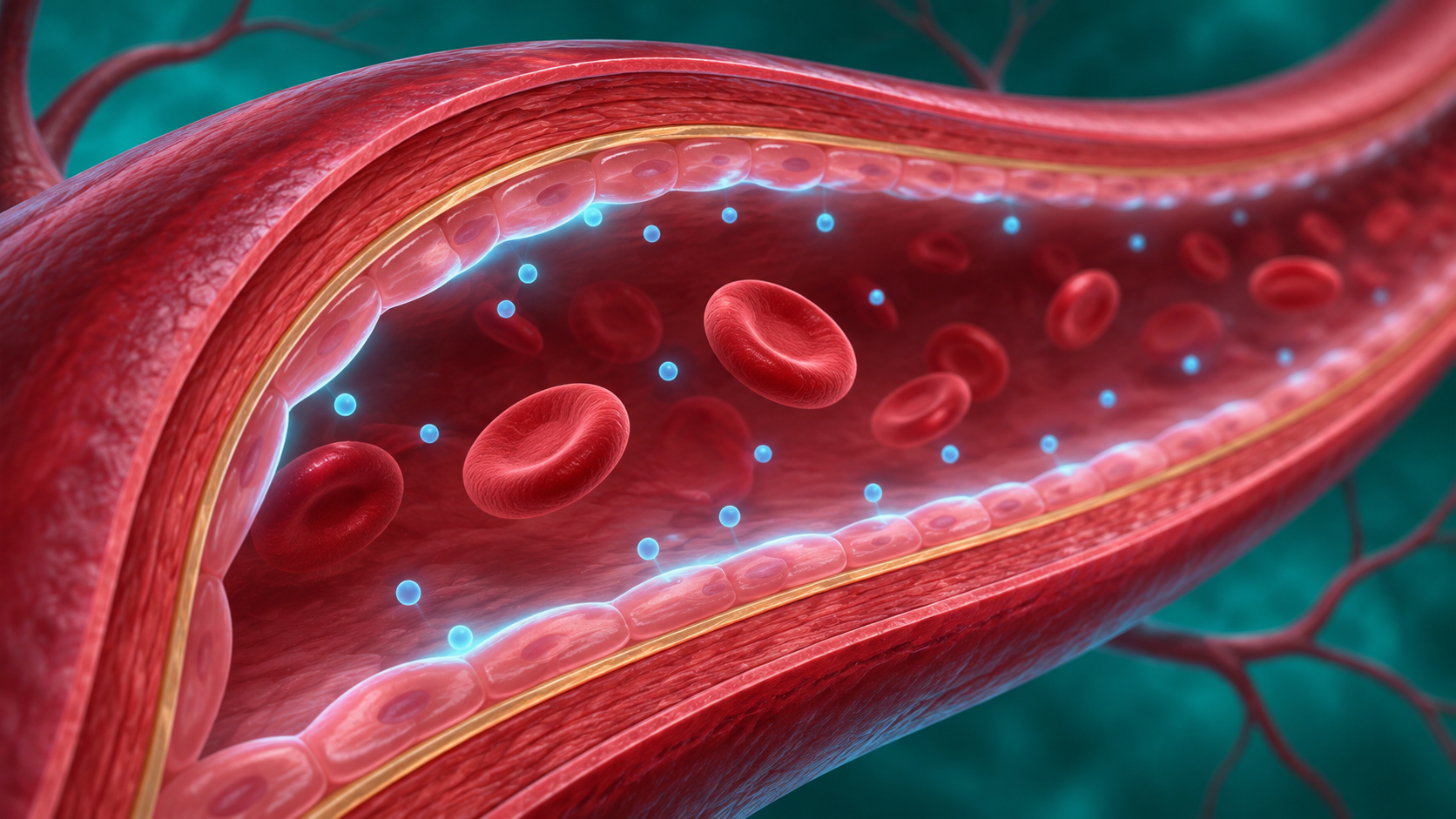
Dietary nitrate can improve a vascular research measure, but high heterogeneity and null hypertension results prevent a universal circulation claim.
A flexible artery is a useful research signal
Flow-mediated dilation, or FMD, measures how an artery widens after blood flow increases. A 2026 meta-analysis of 13 randomized studies found that inorganic nitrate improved this endothelial response on average.
FMD is not a home wellness score or proof that a supplement prevents heart disease. Our beetroot and mouthwash guide explains the oral-bacteria step that helps convert nitrate to nitrite before nitric-oxide signaling. For a related evidence comparison, see Beetroot, Mouthwash, and Nitric Oxide: The Oral-Bacteria Link.
The benefit-led takeaway is precision: nitrate has a measurable vascular pathway, but dose, population and study design decide whether that pathway changes the outcome.
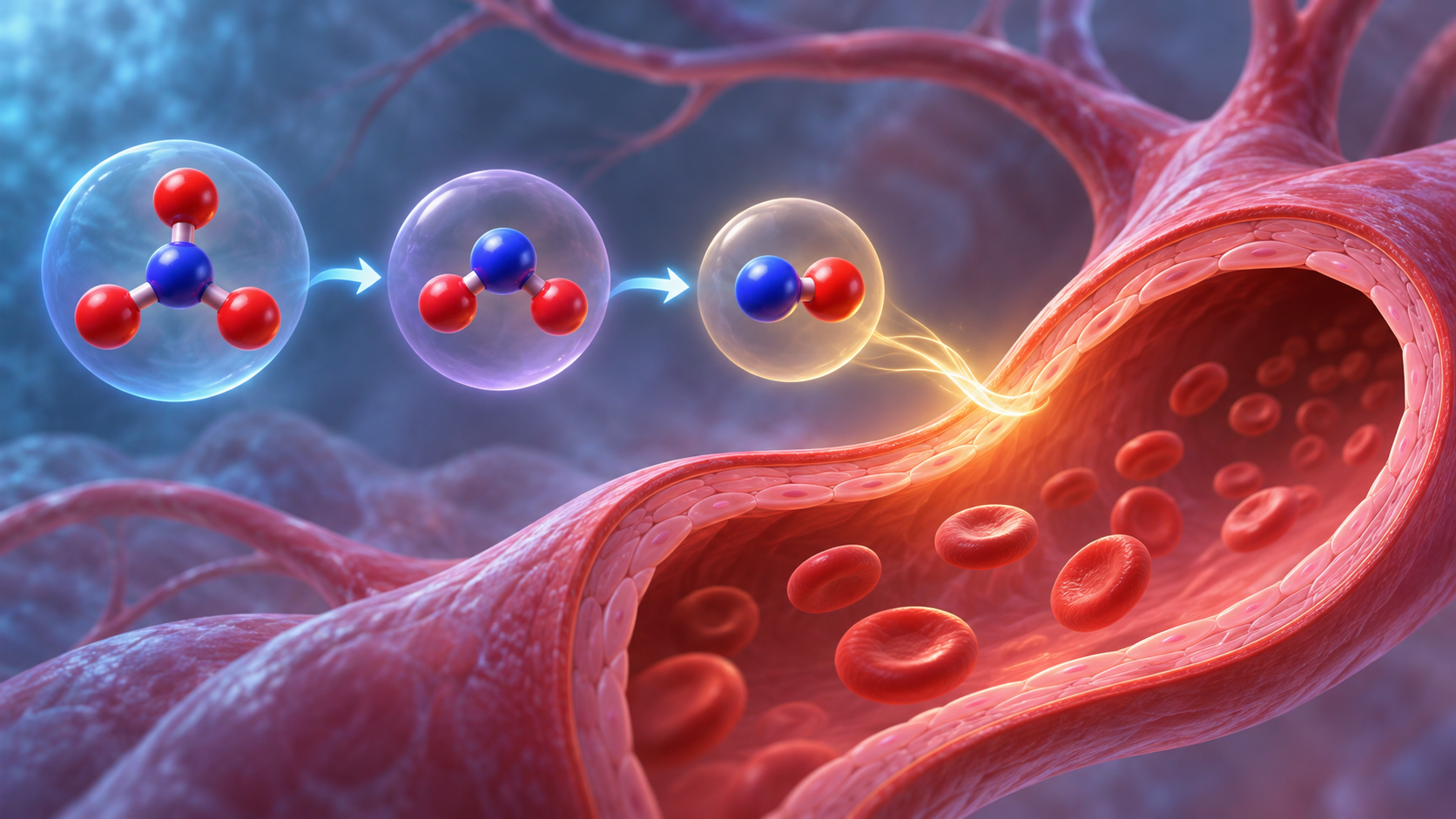
The meta-analysis also found major variation
The pooled estimate favored nitrate, yet heterogeneity was extremely high. Acute studies appeared to show larger responses than chronic studies, and the included interventions ranged across dietary and nondietary nitrate sources. For a related evidence comparison, see High-dose vitamin C for stress: cortisol findings do not justify routine megadosing.
A pooled average can hide responders, null trials and different measurement methods. Our omega-3 anxiety guide offers a similar lesson about promising averages paired with low certainty.
FMD is operator-dependent and sensitive to preparation, cuff placement and timing. It should not be translated into a guaranteed percentage improvement for an individual shopper. The BulkSupplements beetroot review applies that measurement problem to a powder whose gram weight does not disclose nitrate exposure. The BulkSupplements.com Organic Beet Root Powder review addresses the same nitrate-label gap in a powder format. For a related evidence comparison, see BulkSupplements Beet Root Powder Review: Pros, Cons & Daily Use.
A hypertension trial found no sustained vascular gain
In a randomized crossover study of 15 older adults with treated hypertension, nitrate-rich beetroot juice raised nitrate and nitrite markers but did not improve forearm vascular responses or home and ambulatory blood pressure after four weeks.
That null result does not erase other trials. It shows that a working biochemical pathway can exist without a clinically useful change in a particular treated population. The CoQ10 fatigue guide offers a useful methodological comparison: a plausible cardiovascular pathway and a symptom outcome still require separate evidence. For a related evidence comparison, see CoQ10 for fatigue: reduced fatigue scores do not prove better sleep.
Medication, age, baseline endothelial function and oral bacteria may modify response. Research in healthy adults cannot be assumed to predict someone already taking several blood-pressure medicines. The Carlyle beetroot review makes the same distinction between an extract-equivalent number and a quantified nitrate dose. The Carlyle Nutritionals Beet Root review addresses the same issue for an extract-equivalent capsule label. For a related evidence comparison, see Carlyle Beet Root Review: Pros, Cons & Daily Use.

Beetroot grams are not nitrate milligrams
Trials generally quantify nitrate and often use a nitrate-depleted placebo. Many retail capsules list only beetroot powder weight, which cannot reveal the actual nitrate exposure. The Havasu beetroot review provides another label example where beetroot branding does not disclose a nitrate dose. For another beetroot label comparison, see Havasu Beet Root Powder Review: Pros, Cons & Daily Use.
VitaVein is a once-daily beetroot capsule positioned for heart health and circulation. Its current page lists beetroot powder rather than a quantified nitrate amount, so the FMD evidence should be discussed as ingredient context, not a finished-product result.
People using blood-pressure medicines, nitrate drugs or PDE5 inhibitors should discuss concentrated beetroot products with a clinician. Dizziness or faintness is a warning, not proof of efficacy. The Nature’s Nutrition beetroot review gives another practical example of why an impressive beetroot number may not quantify nitrate. The Piping Rock beetroot review supplies another capsule-label example where beetroot weight is not a nitrate assay. The Piping Rock Beet Root review supplies a third capsule-label comparison. For another relevant comparison, see Nature’s Nutrition Beet Root Review: Pros, Cons & Daily Use.
Make the comparison clinically useful
Look for quantified nitrate, batch testing and a clear serving. The VitaVein review provides shopping context, while the present question remains whether a tested nitrate dose changes a vascular outcome. For another relevant comparison, see VitaVein Review: A Calmer Shopping Decision for a Clear Heart-Health Routine.
Do not stop prescribed mouthwash or cardiovascular medication to optimize a supplement pathway. Measure blood pressure with a validated cuff after quiet rest if a clinician recommends monitoring. For a related evidence comparison, see Omega-3 supplements for stress and anxiety: promising results with low certainty.
Dietary nitrate has one of the more coherent supplement pathways, and the new FMD review strengthens it. The large study-to-study variation still demands careful labels and modest claims.
Nitrate content can vary with the plant, harvest, processing and storage. A deep red color or an impressive beetroot powder weight is not a laboratory assay. When a label does quantify nitrate, compare milligrams per complete serving and note whether the directions require several capsules. Independent testing is more informative than a circulation icon on the bottle.
Normal red or pink urine and stool can occur after beetroot, but sudden dizziness, fainting, chest pain or severe weakness is not a shopping experiment. Seek appropriate care. People with kidney disease, recurrent kidney stones or medically restricted potassium intake should also ask whether the whole formula fits their plan, since concentrates can differ from ordinary food portions.
Food remains a reasonable reference point. Leafy greens and beets contribute nitrate within a broader dietary pattern, while concentrated shots and capsules are dosing tools with different label questions. The supplement evidence should not turn vegetables into drugs, and a null supplement trial should not be used to dismiss the cardiovascular value of an overall healthy diet.