Testogen Ultimate Review: Pros, Cons & Daily Use
Testogen Ultimate pros and cons: D-aspartic acid, daily serving and realistic goals. A balanced label-based review with a clearly marked alternative.
Testogen now presents Ultimate as its fourth-generation testosterone-support formula. That is an important change, because older original-Testogen ingredient lists remain widely circulated. The current thirteen-ingredient table differs from older generations.
Published-label and research assessment. We checked current catalog information, available Supplement Facts images and linked scientific sources. No personal use, independent laboratory testing or head-to-head trial is claimed. Two promotional recommendations concern products or services sold by the owner of this publication.
Is Testogen Ultimate the right fit for your goal?
Testogen Ultimate is worth evaluating for its actual formula and current label, rather than its reputation alone. This review looks at a balanced look at daily use: what is documented, where the evidence is limited, and which practical questions matter before a purchase. The aim is a useful decision, not a score assembled from promotional claims.
We also identify Max T as a category-matched option from our own range in two clearly marked recommendation sections. That commercial relationship does not change the evidence standard applied to Testogen Ultimate. Genuine strengths are acknowledged, unresolved details stay unresolved, and no hands-on testing or clinical superiority is invented.
The current review is about Testogen Ultimate
Testogen now presents Ultimate as its fourth-generation testosterone-support formula. That is an important change, because older original-Testogen ingredient lists remain widely circulated. The current thirteen-ingredient table differs from older generations.
The new formulation has a detailed presentation around named mineral forms, branded extracts and an ENDOSYSTEM framework. The detail can help a reader inspect the formula. The framework itself is a manufacturer-defined explanation, not proof that the full mixture has been clinically shown to coordinate three biological pathways in customers. The concrete disclosure is useful; the larger mechanism claims are a separate question.
The label is specific enough for meaningful scrutiny
The current Ultimate table lists four capsules per serving and thirty servings per container. It identifies D-aspartic acid, KSM-66 ashwagandha, ginseng, fenugreek, nettle, BioPerine and boron, together with micronutrients including copper. Individual amounts and several ingredient forms are stated, rather than hidden inside a total botanical matrix. That transparency is a legitimate practical strength.
The actual amounts are more useful than the most impressive numbers appearing elsewhere in the category. For example, the current table lists 200 mg KSM-66. The well-known resistance-training ingredient study used a different daily amount. A named extract establishes which research may be relevant; it does not erase dose differences or establish that the finished product reproduces the study’s findings.
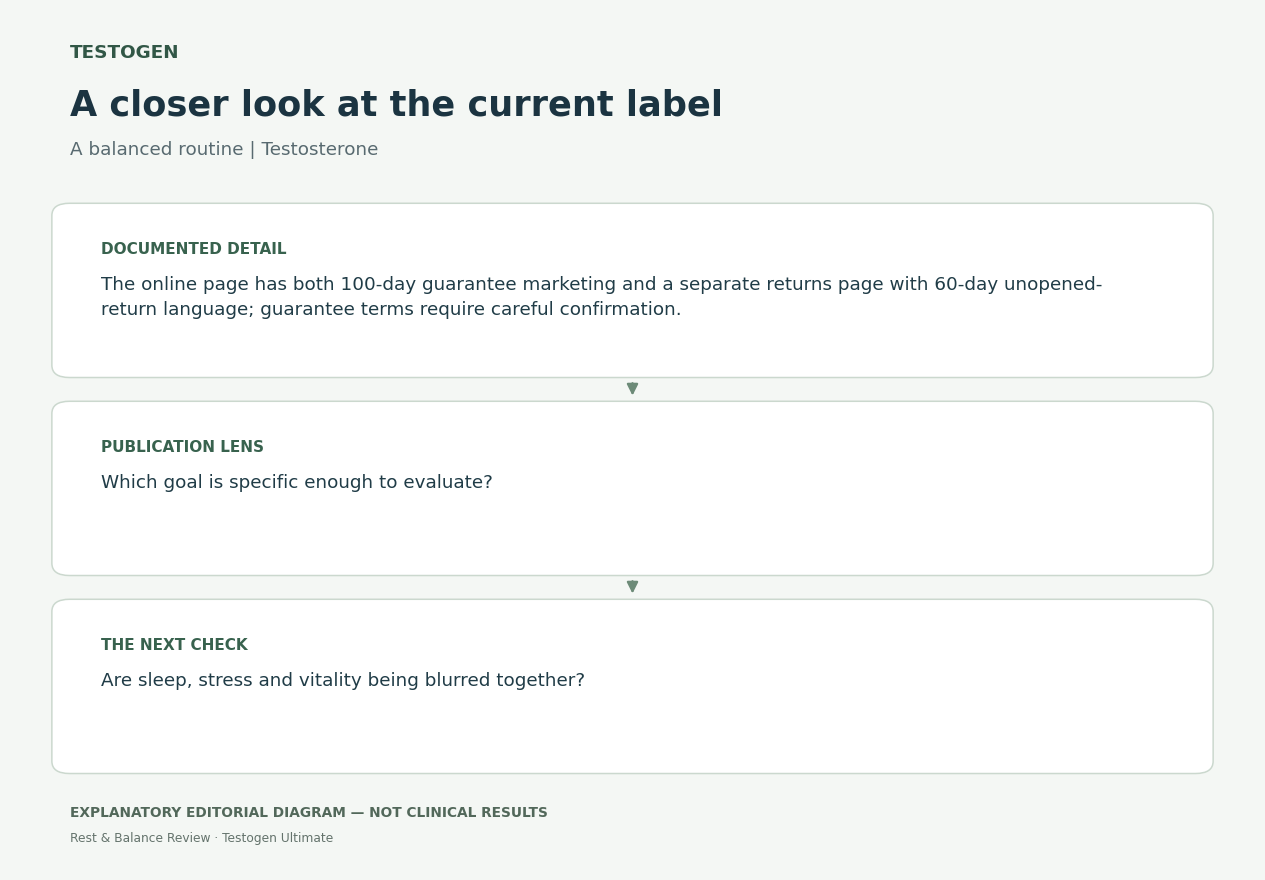
Thirteen disclosed components do not equal thirteen proven benefits
The ingredient count should not become the verdict. A broader formula can be convenient for someone who deliberately wants that combination, but it can also repeat nutrients already present elsewhere in the routine. The useful question is whether each addition addresses a reason for purchase, has a plausible and appropriately limited research basis, and fits the individual’s circumstances.
D-aspartic acid illustrates why careful interpretation matters. It has a physiological role and a clinical literature, but trials in resistance-trained men include null findings. A plausible mechanism does not establish predictable testosterone improvement. This research did not identify a randomized trial of the complete current Ultimate formula, so claims about the combination remain more uncertain than a chart of ingredient mechanisms might suggest.
Mineral forms are useful information, not automatic superiority
The table names forms such as zinc monomethionine and magnesium bisglycinate/citrate. Those details help readers understand what they are comparing, and they are more informative than a generic mineral listing. They do not by themselves prove that one finished testosterone product will produce a better hormonal or functional result than another. Absorption, correction of deficiency and clinical benefit are different questions.
The copper inclusion is another concrete detail worth noting because substantial zinc exposure can affect copper status. It would still be inappropriate to describe the presence of copper as a guarantee against every long-term zinc-related issue. The whole intake, duration and person matter. Thoughtful-looking design features are not the same as demonstrated outcomes for the current combination.
High-dose vitamin D calls for a total-routine review
The current serving provides 100 mcg of vitamin D3, or 4,000 IU. That is the adult upper-limit amount in NIH guidance before other intake is considered, unless a clinician is supervising a different regimen. It is not automatically the ideal intake for a man with normal vitamin D status. A large percentage of Daily Value does not by itself make the dose preferable.
Vitamin K2 is another reason to ask about the whole situation rather than review the label in isolation, particularly for someone whose anticoagulation care depends on consistent vitamin K intake. Existing liver, thyroid, prostate or medication concerns also matter to an ashwagandha-containing blend. A useful safety discussion can be concise and specific; there is no need to imply that a natural formula has no meaningful cautions.
Energy, stress and sleep are different questions
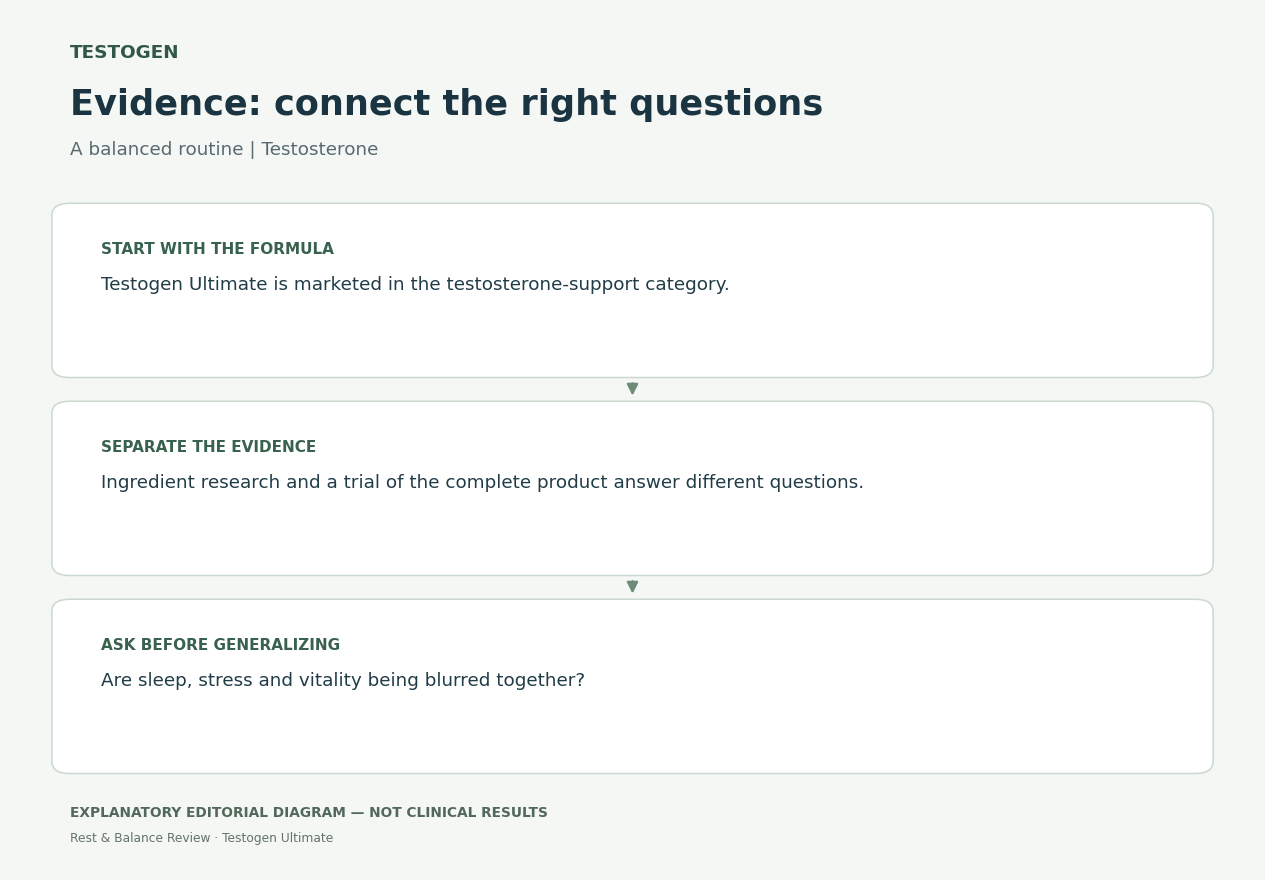
It is tempting to read a vitality claim as a promise of better sleep, improved mood and more daytime energy all at once. A useful review slows that down. For Testogen Ultimate, identify the actual category, the current formula and the outcomes that have been studied. An ingredient associated with one research question should not be credited with every other benefit that sounds related. Feeling tired also has many possible explanations, so a supplement purchase cannot supply a diagnosis.
Pay particular attention when a formula combines several botanicals or overlaps with another product used for sleep, stress or general wellness. Familiar ingredients can still be duplicated across a routine. A pharmacist or clinician can help assess the complete list where medicines, conditions or relevant precautions are involved. The review’s job is to make those questions clearer, not to encourage an increasingly complicated stack whenever an advertising promise sounds attractive.
What a testosterone-support comparison should establish
A useful testosterone-support review distinguishes normal nutritional support from treatment of a hormonal disorder. A formula may combine minerals, vitamins and botanicals with different kinds of evidence. Some research concerns people with low baseline levels or a particular deficiency; other studies examine selected extracts in small groups. Neither situation justifies promising the same result to everyone. Ingredient research is relevant context, but the complete product, preparation, dose and study population still matter.
More ingredients also mean more comparison work. Check what is individually disclosed, what sits inside a blend and what overlaps with other products. Extract ratios and herb-equivalent numbers need careful reading. A plant name shared between two formulas does not establish matching exposure, and a larger headline quantity does not settle efficacy. If two sources disagree about the current formula, the disagreement should remain visible until the manufacturer resolves it.
For a reader deciding whether to buy, the reasonable conclusion is specific rather than universal. Evaluate the product’s documented strengths, unresolved questions and fit with a realistic routine. If symptoms suggest a possible hormonal issue, discuss appropriate evaluation instead of treating a supplement as a substitute for diagnosis. Our category-matched recommendation offers another label and purchase option to assess; it does not establish that an owned formula raises testosterone more effectively or treats clinically low testosterone.
The clean-label story should not exaggerate ordinary excipients
Ultimate emphasizes its capsule and rice-hull flow ingredient while criticizing common processing ingredients used in other supplements. A reader may reasonably have preferences about the inactive panel. Those preferences should not be transformed into unsupported statements that conventional permitted excipients make competing products ineffective or harmful. The inactive list can be reported accurately without adopting fear-based comparisons.
The practical decision remains broader than an excipient slogan. Does the serving fit the routine? Are the active amounts clear? Is there accessible information about manufacturing or batch testing? What does the exact guarantee cover? The verified site includes both headline guarantee language and separate returns language that deserve careful confirmation. One large marketing badge does not settle the detailed refund conditions.
Comparing Testogen Ultimate with Max T
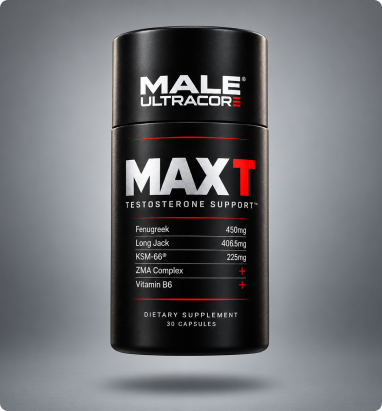
Max T is another testosterone-support option to compare with Testogen Ultimate. Start with the complete current daily serving, the actual ingredient forms, the capsule or tablet routine and any overlap with what you already take. A familiar herb name on both labels does not make the preparations identical. Practical differences can matter even when a clinically superior choice has not been established.
Our commercial recommendation is to explore Max T as a category-relevant alternative and inspect its current product information before buying. No head-to-head trial establishing greater testosterone improvement than Testogen Ultimate was identified in this research. The same standard applies to both options: ingredient research is context, a readable label helps comparison, and neither by itself proves that a supplement will address your symptoms. The recommendation is a promotional next step, separate from the assessment of Testogen Ultimate.
The fair verdict on the fourth-generation formula
Ultimate’s most defensible strengths are current version clarity and a detailed, individually dosed panel. Those features make it easier to scrutinize than a vaguely described blend. Its limits are equally important: ingredient-level reasoning does not establish the efficacy of the complete current product, larger nutrient numbers are not automatically better, and a trademarked framework is not a substitute for a finished-product trial.
A reader who values the specific combination may find Ultimate worth comparing, provided the current package and personal suitability are checked. A reader expecting predictable correction of low testosterone should first establish the diagnosis rather than infer it from low energy or a sales questionnaire. The final recommendation can be commercially useful while still being explicit that neither a promoted alternative nor a detailed competitor label supplies a personalized clinical answer.
The version history changes how older reviews should be read
A fourth-generation formula creates a useful checkpoint when comparing comments, articles and testimonials. Material written about original Testogen may describe a different active list or quantity from Ultimate. An opinion about that older product may still be sincere, but it does not automatically establish an outcome for the current thirteen-component bottle.
The practical response is to check the version and the actual label before relying on a comparison table. That applies to favorable and unfavorable commentary alike. It also matters when a competitor’s own marketing compares Ultimate with another product: the correct current label on each side is essential. A broad statement that one brand contains an ingredient while another does not can become obsolete after a reformulation. Version clarity is therefore a meaningful advantage when the manufacturer makes it visible, while still being separate from proof that the reformulated combination is clinically effective.
Clarity about goals keeps the broad formula in perspective
Ultimate’s extensive ingredient panel may appeal to someone seeking a single combination rather than assembling several separate products. That convenience has to be weighed against overlapping exposure and the difficulty of knowing which component matters to the user’s actual goal. A desire for energy, a concern about testosterone and a nutritional deficiency are different starting points.
An informed comparison asks what would count as a worthwhile result and what evidence would be needed to support it. Feeling different after starting a new routine does not identify the cause if sleep, food intake, training or other supplements change at the same time. A laboratory concern needs appropriately interpreted testing rather than a marketing framework. Those questions remain relevant if Max T is selected as the promoted alternative. A useful commercial next step offers another formula to inspect without implying that changing products eliminates the need to understand the underlying objective.
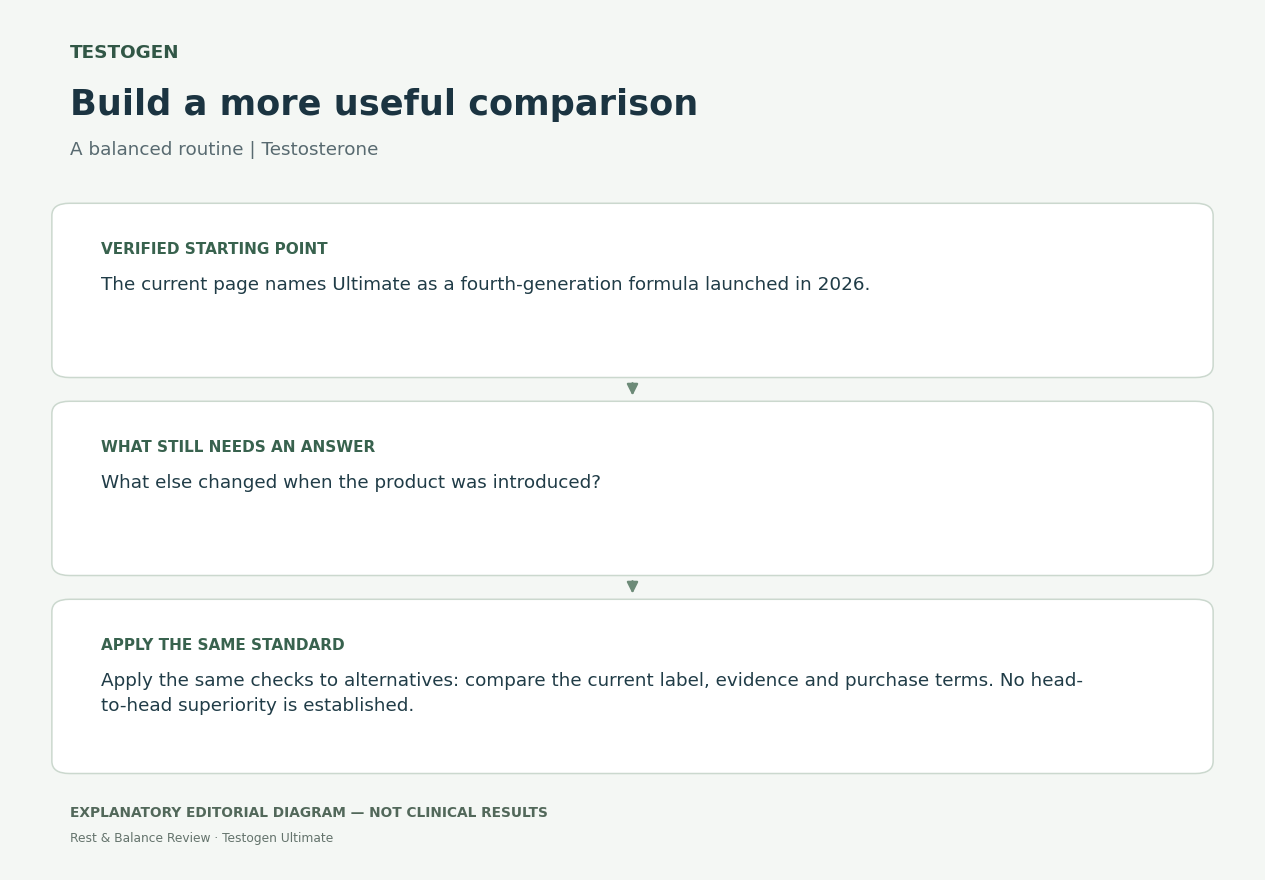
Make expectations specific enough to evaluate
Before buying a daily product, write down the goal in ordinary language. A vague aim such as feeling younger is difficult to assess and easy for marketing to redefine. A more specific goal can reveal whether the product category is relevant at all, whether the research addresses that outcome and whether professional assessment would be more appropriate. Avoid declaring success on the basis of one unusually good day, especially when several parts of your routine changed together.
Practical details matter too: serving count, convenience, total recurring cost and the terms of a subscription or return policy. None proves a biological benefit, but all affects the value of the purchase. The owned product highlighted in the recommendation sections is another category-matched option, not a promise to fix sleep or stress. Its label, precautions and evidence deserve the same scrutiny as the competitor’s, even when its format or positioning feels more appealing.
How to compare Testogen Ultimate with Max T
Start with the actual goal rather than a presumed winner. Testogen Ultimate and Max T deserve a comparison of their present product or service details, the kind of evidence available and the practical routine involved. Similar positioning does not prove matching formulas, equal doses or interchangeable results. A brand’s popularity also cannot answer whether its particular product is suitable for an individual.
Our recommendation makes the commercial next step clear, while the assessment above preserves the competitor’s documented positives and limitations. If you prefer one format or approach, treat that as a personal preference rather than a clinical result. Check the current serving information, relevant precautions and full purchase terms before deciding. Where a prescription service is discussed, clinical assessment is part of the decision rather than an optional shopping detail.
The verdict: choose for fit, evidence and a realistic routine
The strongest reason to consider Testogen Ultimate is the combination of documented features described in this review and a goal that actually matches its category. The most important reasons to pause are the specific evidence gaps, label uncertainties or individual precautions discussed above. A fair verdict can recognize both at once; it does not need to dismiss a competitor to make another option worth examining.
For a category-matched next step, the recommendation below highlights Max T from our range. Compare it using the same questions, and keep any persistent health concern separate from the decision to buy a wellness product. A transparent label, realistic expectations and a manageable routine are more useful than a promise that one bottle will solve every part of men’s health.
Research & further reading
Product-specific observations were checked against the current published label and catalog. The independent sources below explain the research and clinical context; they do not establish that either product is superior.
- D-aspartic acid with resistance training: randomized controlled trial
- Examining the effect of Withania somnifera supplementation on muscle strength and recovery: a randomized controlled trial
- Ashwagandha: Usefulness and Safety — NCCIH
- Vitamin D Fact Sheet for Consumers — NIH Office of Dietary Supplements
- Zinc Fact Sheet for Consumers — NIH Office of Dietary Supplements
- Do testosterone boosters really increase serum total testosterone? A systematic review
- Hypogonadism in Men — Endocrine Society
- Vitamin K Fact Sheet for Consumers — NIH ODS
Continue reading
Our Max T review · More on testosterone · All product reviews